
Can a Log Cabin Side Shed Be Installed on Either Side? A Technical Guide to Reversible Layouts
One of the most common questions asked by prospective buyers of log cabins with a side shed is whether the storage extension can be positioned on either the left or right side of the main cabin.
This concern is entirely understandable. Every garden presents unique challenges, including restrictive boundary lines, neighbouring windows, access paths, fences, existing landscaping and varying privacy requirements. A side shed positioned on the wrong side of the building can significantly reduce usability and may even prevent installation altogether.
The good news is that many contemporary log cabin systems utilise modular interlocking construction techniques that frequently allow the layout to be reversed during installation. Understanding how these systems work helps homeowners optimise both the building layout and the surrounding garden space.
Why Buyers Want to Reverse the Side Shed Layout
Garden layouts are rarely perfectly symmetrical. In many cases, homeowners discover that the standard brochure configuration does not suit their available space.
Common reasons for reversing the shed include:
- Maintaining access along a side passage.
- Positioning storage closer to a driveway or gate.
- Improving privacy from neighbouring properties.
- Keeping the main glazed elevation facing the garden.
- Placing the windowless shed wall against a fence.
- Avoiding conflicts with existing patios, trees or landscaping.
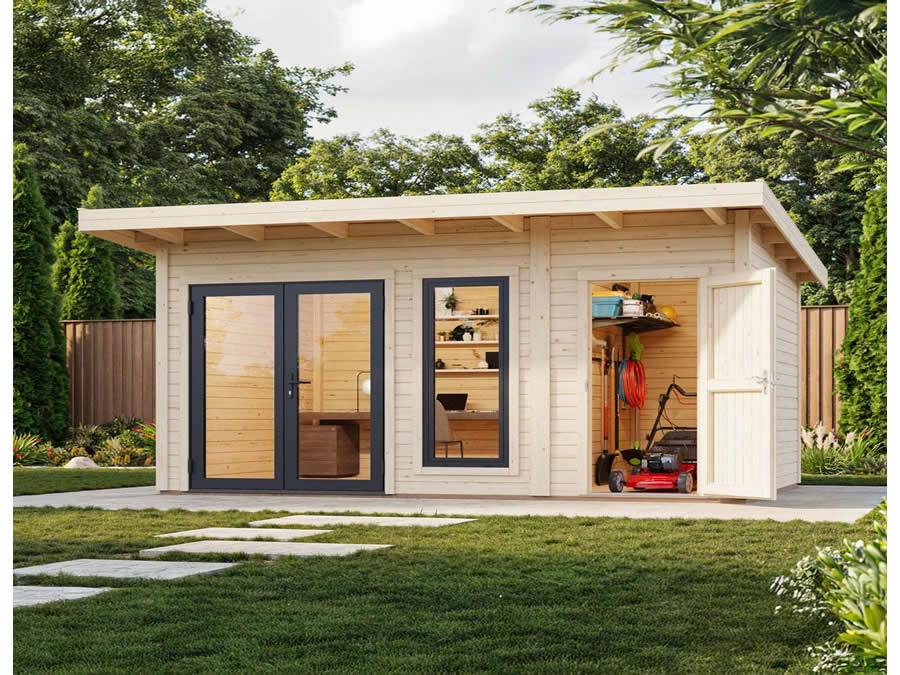
Because integrated side sheds generally contain few or no windows, many homeowners prefer to position this section directly adjacent to a property boundary.
Understanding Modular Interlocking Log Construction
Most premium log cabins are constructed using precision-machined tongue-and-groove wall logs.
Each timber log incorporates:
- A tongue profile.
- A corresponding groove profile.
- Interlocking corner joints.
- Structural stacking geometry.
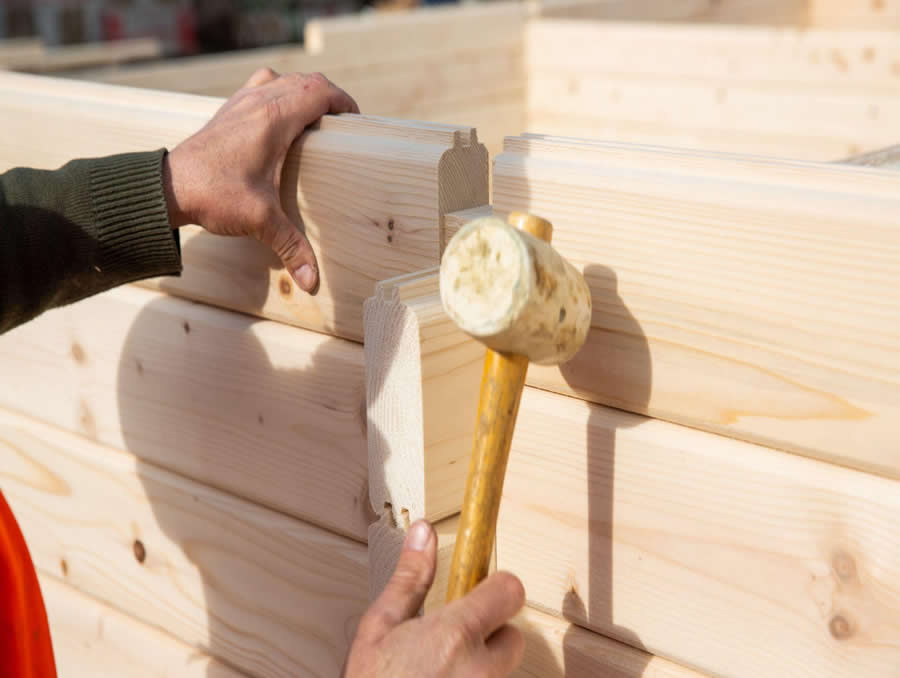
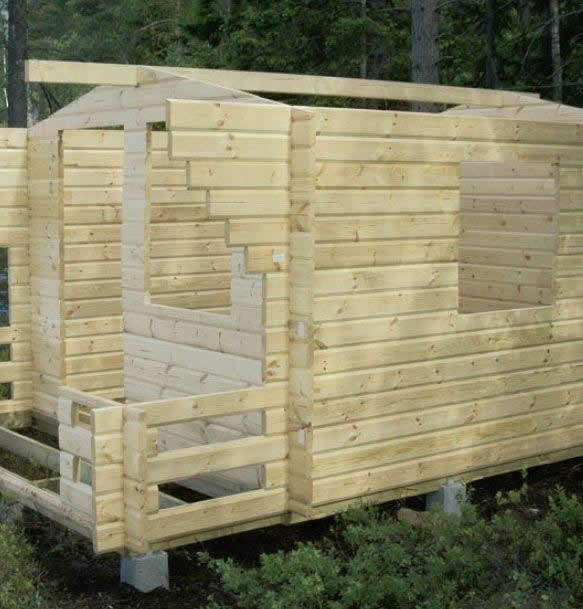
During installation, these individual wall logs are stacked sequentially to form the complete wall structure.
Because the walls are assembled from numerous modular components rather than pre-fabricated panels, many designs can be mirrored during construction.
Can Every Side Shed Cabin Be Reversed?
No.
Although many cabins offer reversible layouts, not every design can be mirrored.
Whether inversion is possible depends primarily upon:
- The roof construction.
- Door and window positions.
- Internal partition arrangements.
- Prefabricated wall components.
- Factory-manufactured framing systems.
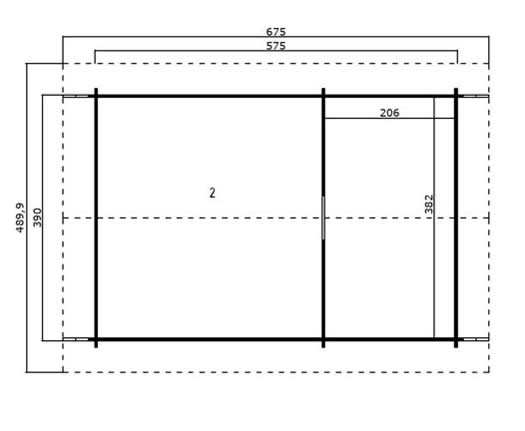
Before purchasing, buyers should always confirm with the supplier whether the specific model supports left-hand and right-hand assembly options.
How Reversible Layouts Work During Construction
In a fully reversible design, installers simply mirror the wall assembly sequence.
Rather than constructing the shed on the left side, the identical components are assembled on the opposite side.
This effectively creates a mirror-image version of the original design.
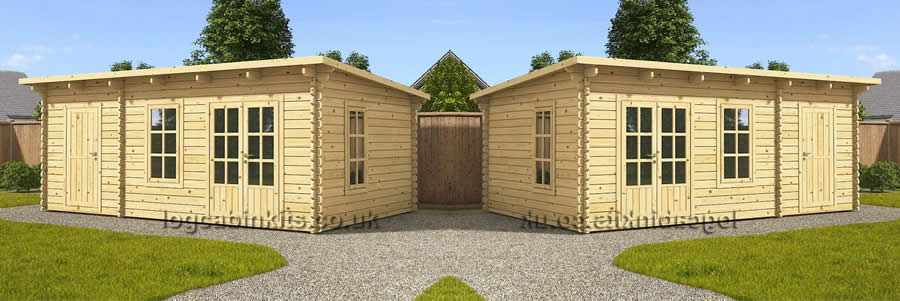
Because the individual wall logs remain identical, the structural integrity of the building is unaffected.
The Importance of Roof Design
Roof configuration is often the deciding factor when determining reversibility.
Simple apex roof cabins generally offer the greatest flexibility because the roof geometry is symmetrical.
Pent roof designs may require more careful evaluation.
Particular attention should be paid to:
- Roof fall direction.
- Fascia arrangements.
- Rainwater drainage.
- Roof boarding dimensions.
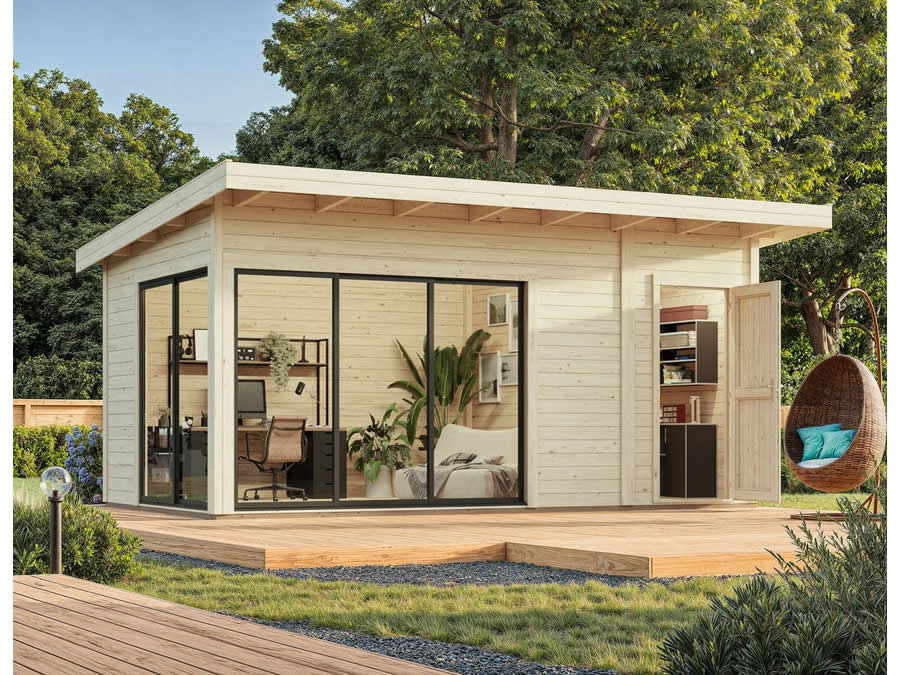
Many modern pent roof cabins remain fully reversible, but confirmation should always be obtained before installation begins.
Positioning the Windowless Shed Wall Against a Boundary
One of the greatest advantages of an integrated side shed is that the storage section often features solid timber walls with little or no glazing.
This makes the shed particularly suitable for placement adjacent to fences or property boundaries.
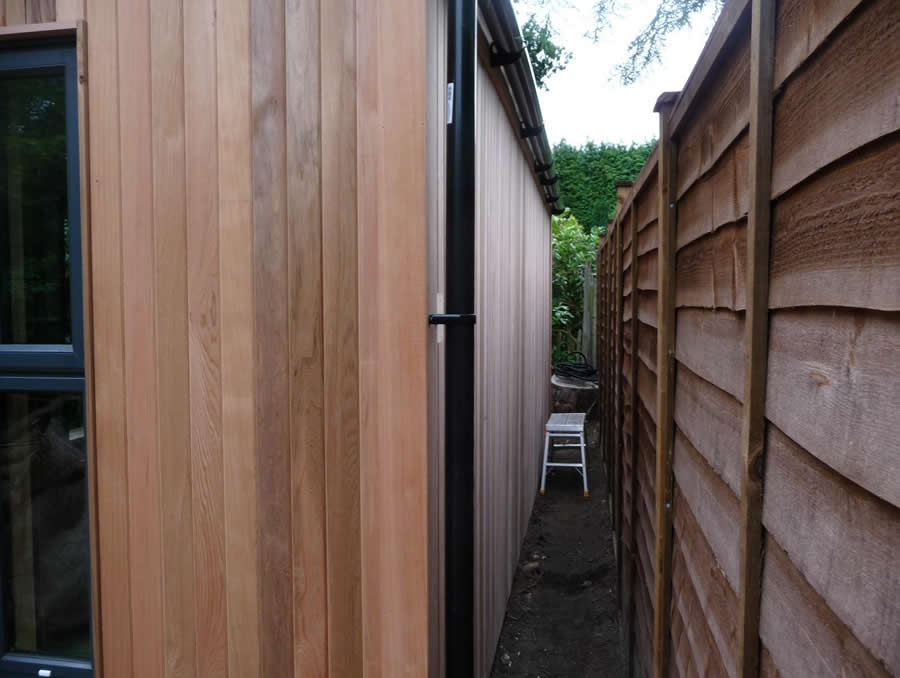
Benefits include:
- Enhanced privacy.
- Improved security.
- Reduced overlooking.
- Better use of restricted garden space.
- Preservation of glazing on the main room.
Optimising Garden Access Walkways
Many UK gardens include narrow side access routes connecting the front and rear of the property.
Positioning the shed incorrectly can obstruct these valuable circulation routes.
Reversing the shed layout often provides a simple solution.
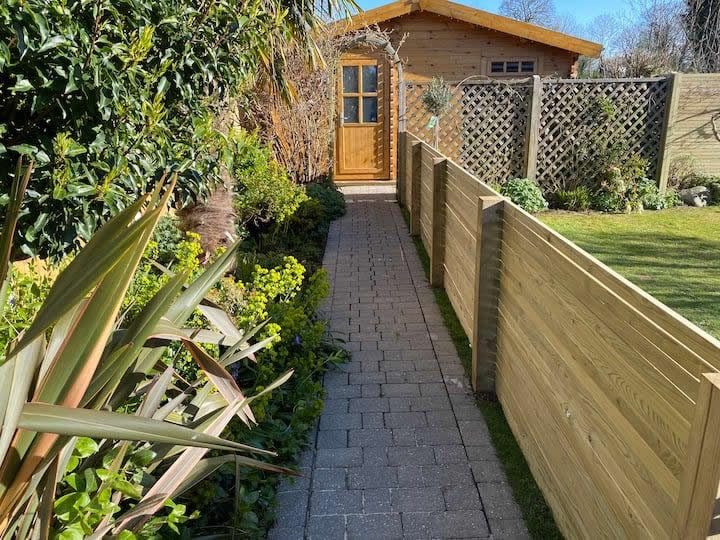
By placing the storage room adjacent to the least-used section of the garden, homeowners can preserve access for:
- Wheelbarrows.
- Bicycles.
- Garden equipment.
- General pedestrian movement.
Protecting Views and Natural Light
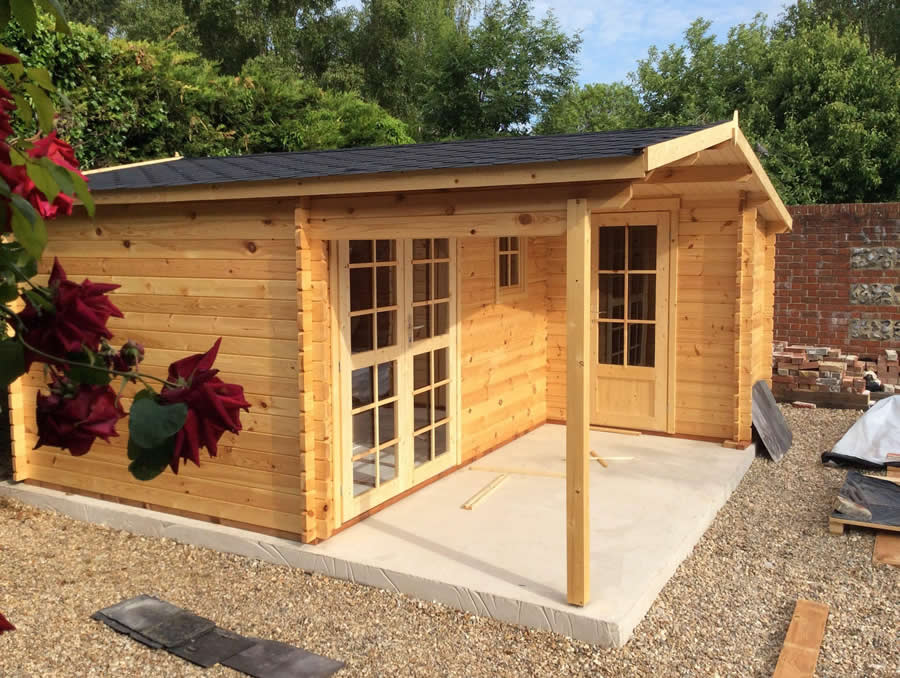
The principal room within a log cabin often incorporates large windows or glazed doors.
These openings should ideally face the primary garden area.
Reversing the side shed layout frequently allows homeowners to maximise:
- Natural daylight.
- Garden views.
- Solar gain.
- Overall room usability.
Internal Partition Considerations
Where internal partitions divide the cabin from the storage section, these walls are usually constructed using the same interlocking timber system as the external walls.
In reversible designs, the partition position simply mirrors alongside the external wall arrangement.
Installers should carefully follow the manufacturer's assembly instructions to ensure:
- Correct wall sequencing.
- Accurate roof alignment.
- Proper door operation.
- Structural continuity.
Foundation Planning for Reversible Layouts
The chosen layout should be finalised before constructing the foundation.
This ensures:
- Door thresholds align correctly.
- Drainage routes remain unobstructed.
- Access paths are maintained.
- Roof overhangs do not conflict with boundaries.
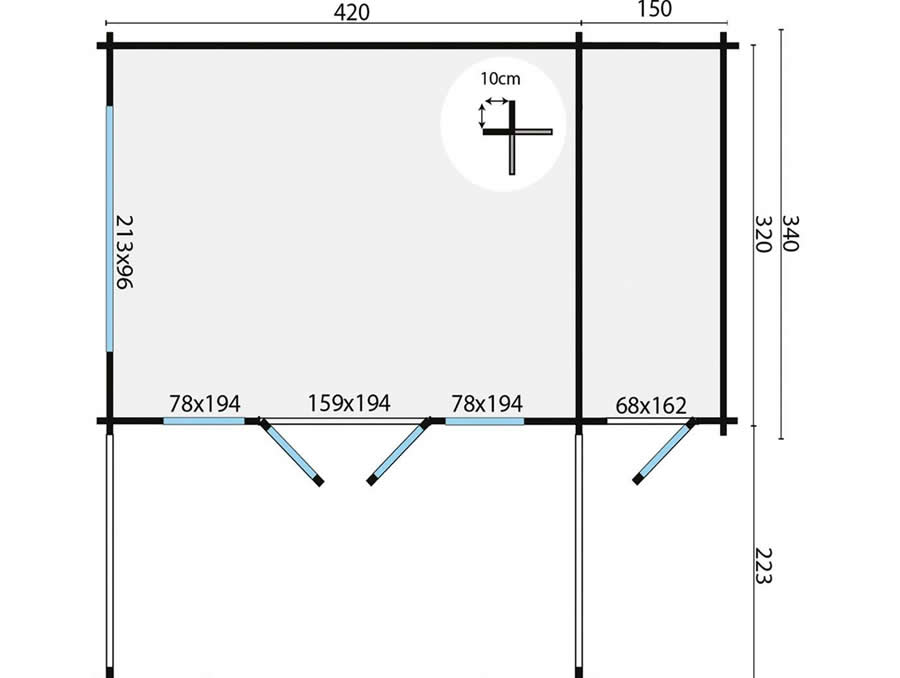
Once the base has been installed, altering the orientation becomes significantly more difficult.
Planning Permission Implications
Reversing the side shed rarely affects planning status directly.
However, positioning the windowless shed wall adjacent to a fence may help homeowners maintain compliance with planning restrictions, particularly where the building sits within 2 metres of a boundary.
The well-known 2.5 metre overall height restriction continues to apply regardless of orientation.

Questions to Ask Before Ordering
- Can the cabin be assembled as either a left-hand or right-hand configuration?
- Does reversing the layout affect roof construction?
- Are additional components required?
- Will the installation manual cover both configurations?
- Will reversing the layout affect warranty terms?
Conclusion
Many contemporary log cabins with integrated side sheds can indeed be configured with the storage section positioned on either the left or right side of the main building. Thanks to modular tongue-and-groove construction techniques, installers can often mirror the wall arrangement during assembly, allowing homeowners to optimise privacy, preserve access routes and maximise usable garden space.
However, reversibility is not universal. Buyers should always confirm compatibility with their supplier before construction begins. When planned correctly, a reversible side shed layout can transform how effectively a garden building integrates with the surrounding landscape while ensuring the main cabin remains bright, accessible and highly functional.