
Small Log Cabin Sizes Compared: How Much Usable Space Do You Really Get from a 2x2m, 3x3m or 4x3m Cabin?
When shopping for compact garden cabins, many buyers focus on the advertised footprint without considering one of the most important factors affecting usability: wall thickness. While a cabin may be marketed as a 2x2m, 3x3m or 4x3m building, the actual internal floor area can vary considerably depending on whether it is constructed using 28mm, 34mm, 44mm or even thicker wall logs.
For buyers working with limited garden space, understanding the relationship between external dimensions, internal space and roof design can help avoid costly mistakes. This guide compares common cabin footprints and examines how wall thickness affects usable floor area. We will also compare apex and pent roof designs to determine which works best in smaller gardens and near boundary fences.
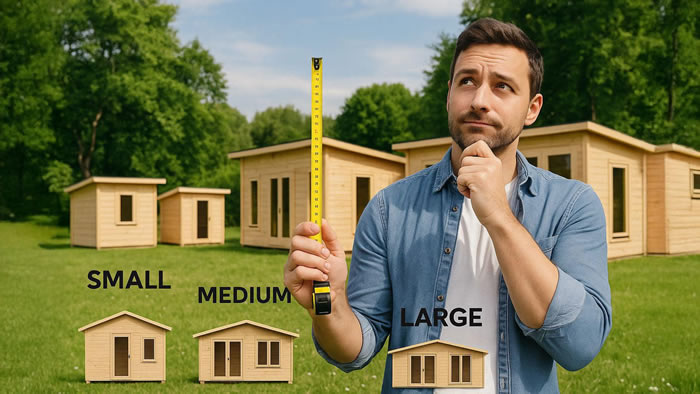
Why Advertised Cabin Sizes Can Be Misleading
Most manufacturers advertise cabins using their external footprint dimensions.
For example:
- 2m x 2m cabin = 4m² footprint
- 3m x 3m cabin = 9m² footprint
- 4m x 3m cabin = 12m² footprint
However, these figures represent the building's outside dimensions rather than the internal usable floor space.
Because log cabins use solid timber walls, the internal dimensions are reduced by the wall thickness on all sides.
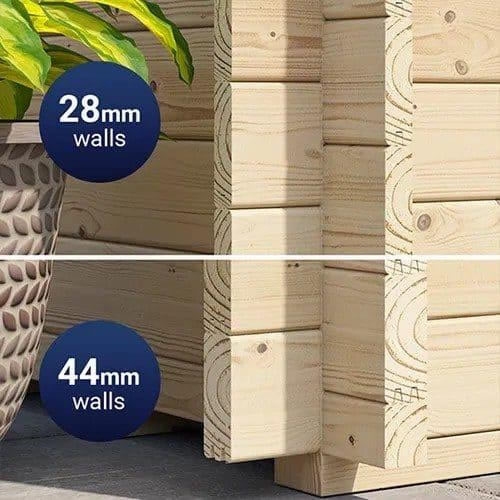
Although 28mm and 44mm walls may not sound dramatically different, the reduction in floor area becomes increasingly noticeable in smaller buildings.
Calculating Internal Dimensions
The calculation is relatively simple.
Internal dimensions are determined by subtracting twice the wall thickness from the external size.
For example:
3m external width using 44mm logs:
- 3000mm - 44mm - 44mm
- Internal width = 2912mm
The same calculation applies to the cabin depth.
Once both dimensions are known, the actual usable floor area can be calculated.
2x2m Cabin Comparison
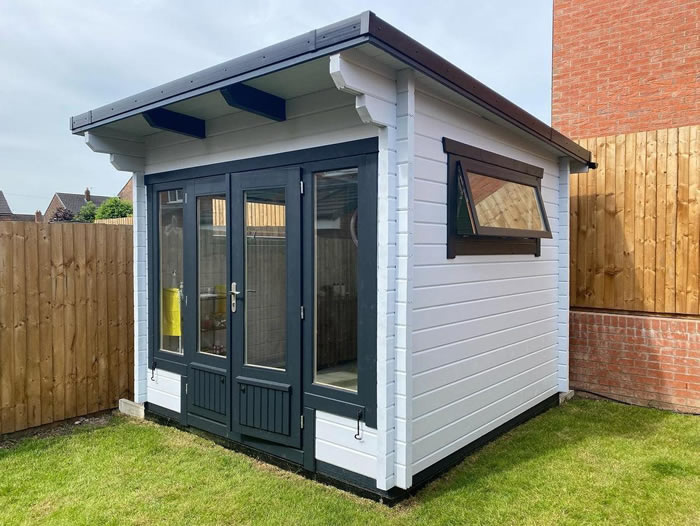
A 2x2m cabin is one of the smallest practical garden buildings available.
They are commonly used for:
- Storage
- Small hobby rooms
- Garden retreats
- Bike storage
28mm Log Version
- External size: 2000mm x 2000mm
- Internal size: 1944mm x 1944mm
- Usable floor area: approximately 3.78m²
44mm Log Version
- External size: 2000mm x 2000mm
- Internal size: 1912mm x 1912mm
- Usable floor area: approximately 3.66m²
The difference appears modest, but within such a small footprint every centimetre matters.
Furniture options become noticeably more restricted as wall thickness increases.
3x3m Cabin Comparison
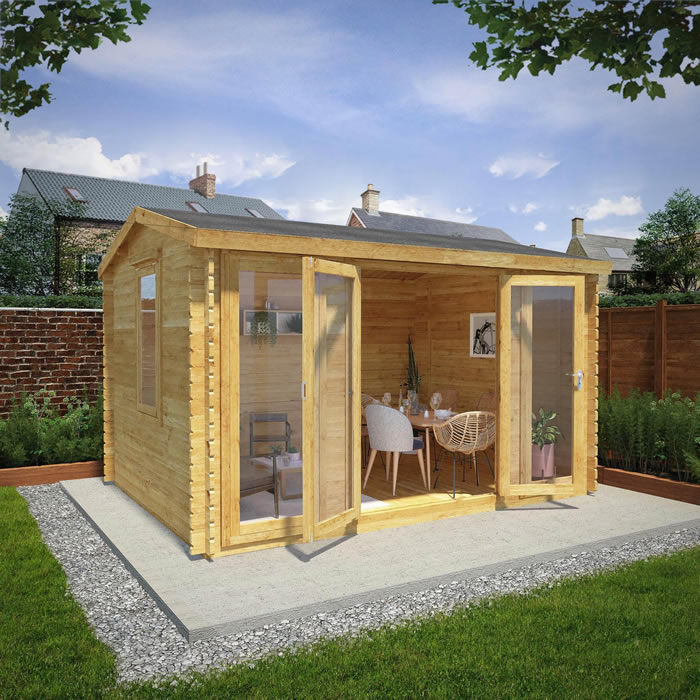
The 3x3m footprint remains one of the most popular cabin sizes in the UK.
It offers sufficient space for:
- Garden offices
- Reading rooms
- Creative studios
- Small gyms
28mm Log Version
- Internal dimensions: 2944mm x 2944mm
- Usable floor area: approximately 8.67m²
44mm Log Version
- Internal dimensions: 2912mm x 2912mm
- Usable floor area: approximately 8.48m²
While the numerical difference appears relatively small, the thicker walls often provide substantially improved insulation and year-round comfort.
Many buyers therefore view the slight reduction in floor space as a worthwhile compromise.
4x3m Cabin Comparison
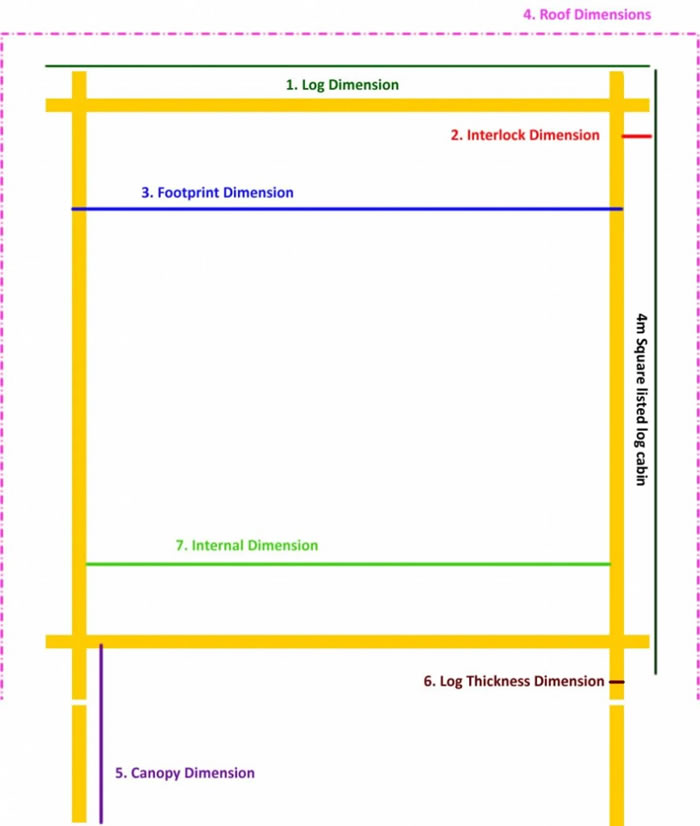
A 4x3m cabin represents a significant step up in usability.
The additional width allows more flexible furniture layouts and improved circulation space.
28mm Log Version
- Internal dimensions: 3944mm x 2944mm
- Usable floor area: approximately 11.61m²
44mm Log Version
- Internal dimensions: 3912mm x 2912mm
- Usable floor area: approximately 11.39m²
This size is often considered the sweet spot for homeowners seeking a practical office or leisure room without overwhelming the garden.
Why Thicker Walls Still Matter
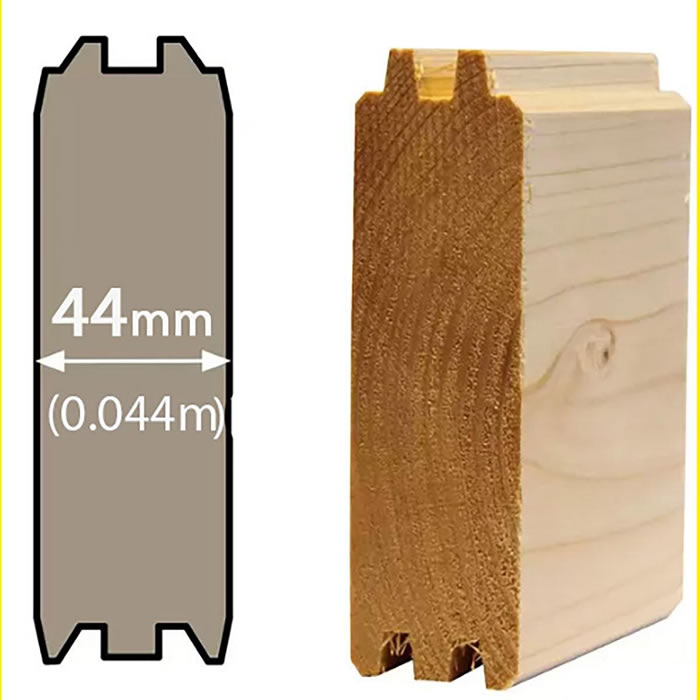
Many buyers focus exclusively on internal floor area, but wall thickness influences far more than available space.
Benefits of thicker wall logs often include:
- Improved thermal performance
- Greater structural rigidity
- Enhanced weather resistance
- Reduced movement over time
- Improved acoustic performance
For occasional summer use, 28mm walls may be perfectly adequate. For year-round offices or hobby rooms, many homeowners prefer 44mm construction.
Apex Roof vs Pent Roof: Which Is Better for Small Gardens?
Roof design can have almost as much impact on usability as the footprint itself.
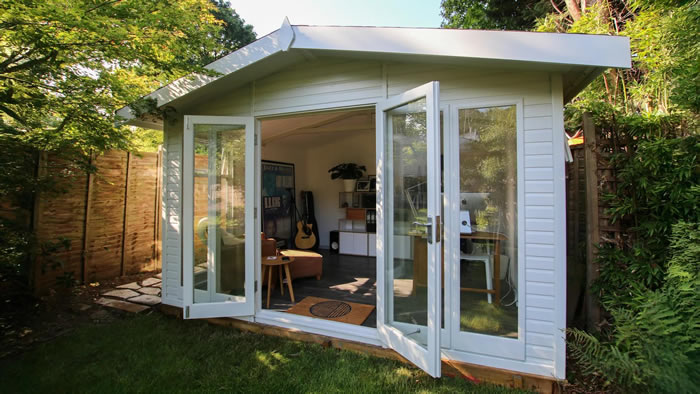
The Benefits of an Apex Roof
Apex roofs remain one of the most traditional and popular options.
The roof rises towards a central ridge, creating a vaulted interior.
Advantages include:
- Greater central headroom
- Traditional appearance
- Enhanced feeling of space
- Improved architectural character
In smaller cabins, vaulted ceilings can make the interior feel considerably larger than the floor area suggests.
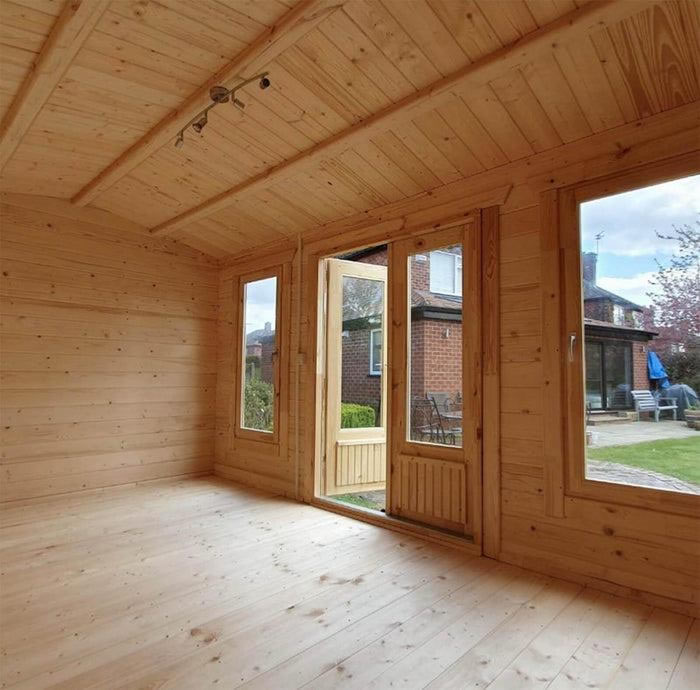
The Benefits of a Pent Roof
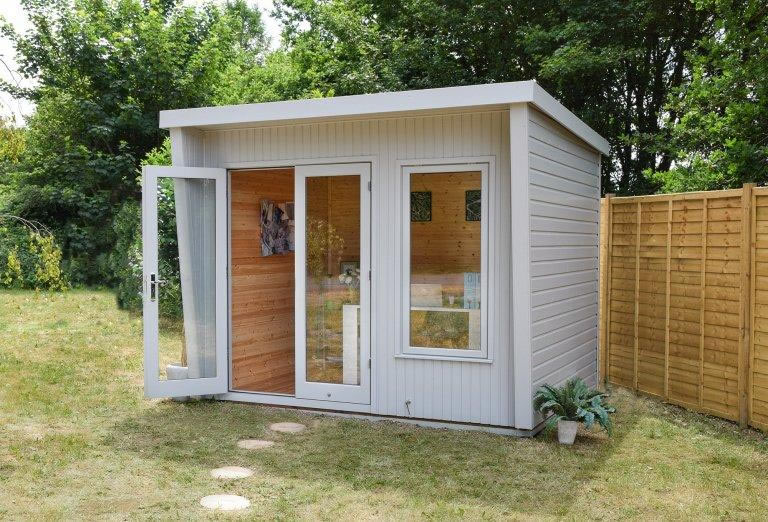
Pent roof cabins have become increasingly popular due to their contemporary appearance and planning-friendly profiles.
Advantages include:
- Modern styling
- Lower overall height
- Better suitability near boundaries
- Higher full-height wall areas
- Excellent compatibility with large glazing
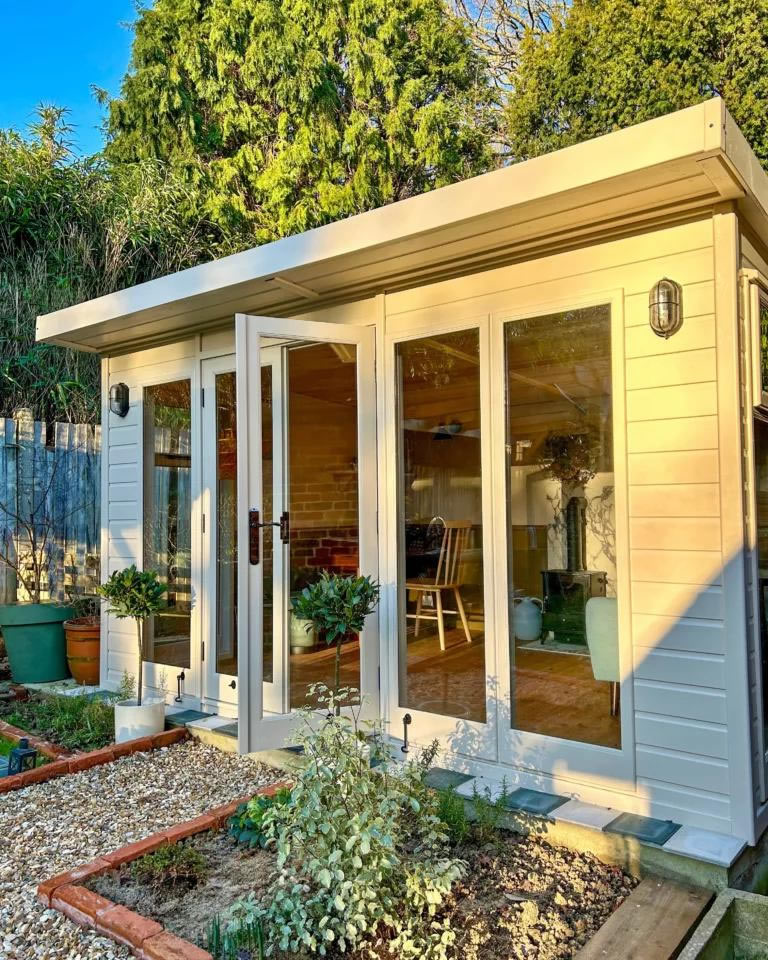
For cabins located within 2 metres of a boundary fence, pent roofs often make compliance with the 2.5 metre planning rule easier.
Which Roof Maximises Usable Space?
The answer depends on how the building will be used.
Apex roofs maximise vertical volume and can create a more spacious atmosphere.
Pent roofs maximise usable wall space and often make furniture placement easier.
For example:
- A garden office may benefit from the full-height walls of a pent roof.
- A leisure room may benefit from the airy feel of an apex roof.
- A storage cabin may benefit from additional ridge height.
Choosing the Right Cabin for a Tight Garden
For smaller gardens, every decision affects usability.
Questions worth considering include:
- How much internal space do you actually need?
- Will the building be used year-round?
- How close is it to the boundary?
- Do you need maximum wall space or maximum ceiling height?
- Will furniture placement be restricted?
Answering these questions often narrows the choice significantly.
Commercial Value Comparison
Many buyers initially choose the smallest possible cabin to save money.
However, moving from a 2x2m building to a 3x3m model more than doubles usable floor area.
Similarly, upgrading from a 3x3m to a 4x3m cabin often creates enough additional space to transform the building from a simple garden room into a fully functional office or leisure area.
When viewed from a cost-per-square-metre perspective, slightly larger cabins frequently provide better overall value.
Conclusion
When comparing small log cabins, advertised dimensions tell only part of the story. Wall thickness reduces usable internal space, and while the difference between 28mm and 44mm logs may appear modest on paper, it can influence furniture placement and room functionality.
For occasional use, thinner wall systems may provide excellent value. For year-round comfort, thicker logs often justify the small reduction in internal dimensions.
Roof style also plays a crucial role. Apex roofs create greater central headroom and a more spacious atmosphere, while pent roofs offer practical advantages near boundaries and maximise usable wall space.
By understanding the true internal dimensions of each footprint and carefully considering roof design, buyers can select a cabin that makes the most of even the smallest garden while delivering long-term usability and value.