
The role of guttering in log cabins explained
TL;DR:
- Guttering in log cabins helps prevent water damage, rot, and insect infestation by channeling roof runoff away from the structure. Proper installation using log-specific brackets and regular maintenance are essential, especially in cold climates where ice dams and snow load pose additional risks. Discharging water at least six feet from the foundation ensures the cabin stays dry and protected over time.
Guttering in log cabins is a water management system that collects roof runoff and channels it away from the wooden structure, preventing the moisture damage and rot that shorten a cabin’s life. Without it, rainwater cascades off the roof and saturates the lowest log courses and the ground around the foundation. Over time, that repeated wetting creates the perfect conditions for fungal decay, insect infestation, and structural failure. If you own a log cabin or you’re planning one, understanding how gutters protect log homes is one of the most practical things you can do.
How does guttering prevent water damage and rot in log cabins?
Properly designed gutters and downspouts prevent roof runoff from soaking the lowest log courses and the foundation. That matters because timber is porous. Once water gets into the grain repeatedly, the wood stays damp long enough for fungal spores to take hold and for wood-boring insects to move in.
The volume of water coming off a cabin roof during a heavy downpour is significant. A roof with a surface area of just 50 square metres can shed hundreds of litres in a single storm. Without a gutter system, all of that lands directly at the base of the cabin walls.
Here is what happens when water is left unmanaged:
- Rot in the lower logs. The base courses absorb the most splash-back and stay wet the longest. Fungal decay starts here first.
- Chinking and sealant failure. Water forced into the gaps between logs breaks down the chinking compound, letting moisture deeper into the wall.
- Foundation erosion. Repeated runoff washes away the soil around the base, undermining the structure over time.
- Insect damage. Damp wood attracts carpenter ants and wood-boring beetles. Once they are inside, the damage is expensive to fix.
- Staining. Overflow from clogged gutters runs down the log face, leaving dark stains that are difficult to remove and that signal ongoing moisture problems.
Pro Tip: Install gutter guards over your gutters from day one. Properly installed gutter guards reduce debris build-up and cut the risk of overflow staining on your log walls.
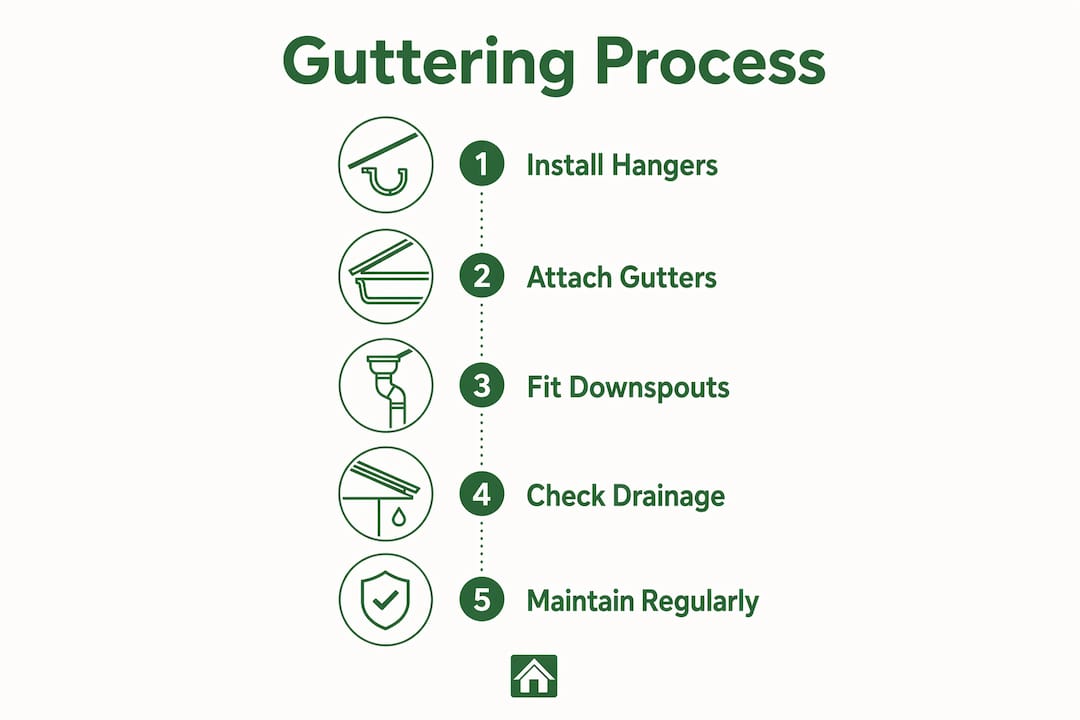
The importance of gutters in cabins goes beyond simple rain capture. Experts treat the whole system, including the gutter channel, the downspout, the discharge point, and the maintenance schedule, as a single unit. Any weak link in that chain reduces the protection the whole system provides.
How is gutter installation for log cabins different?
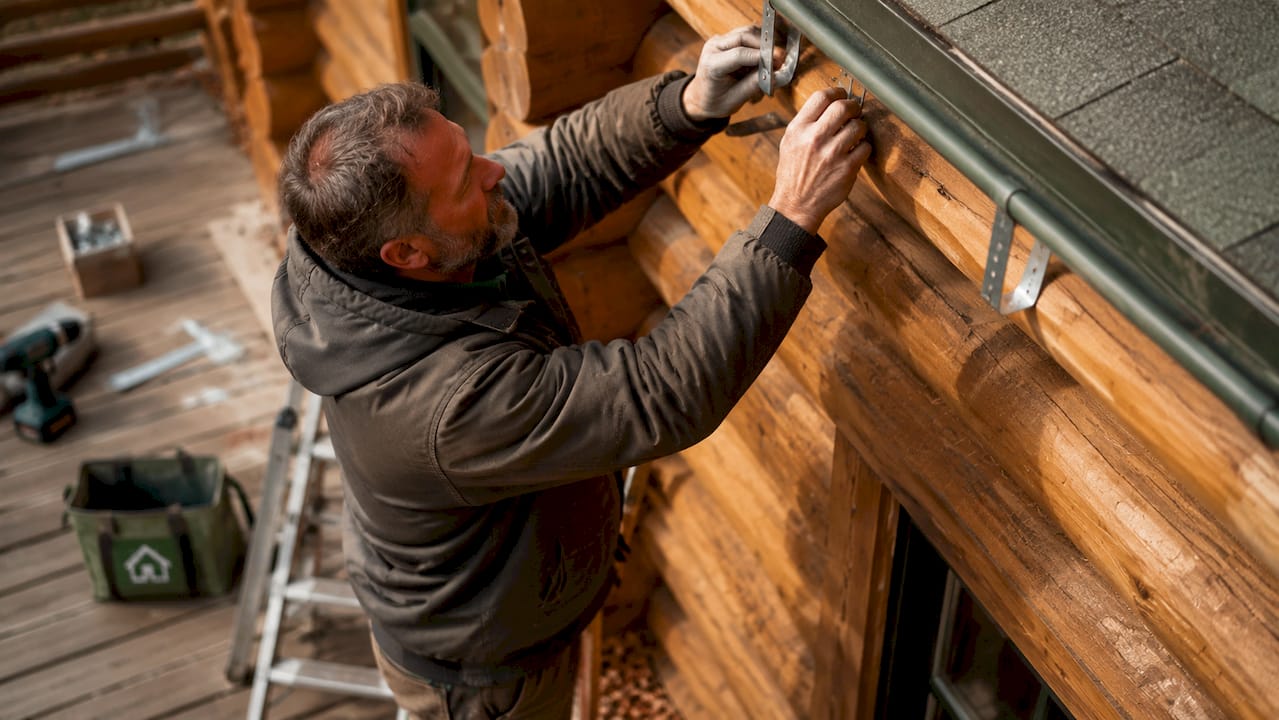
Installing gutters on a log cabin is not the same as fitting them to a standard brick or timber-frame house. The key difference is log movement. Timber logs shrink and expand as they dry and as humidity changes with the seasons. A gutter bracket fixed rigidly to a log end will be pulled away or twisted as the log moves independently.
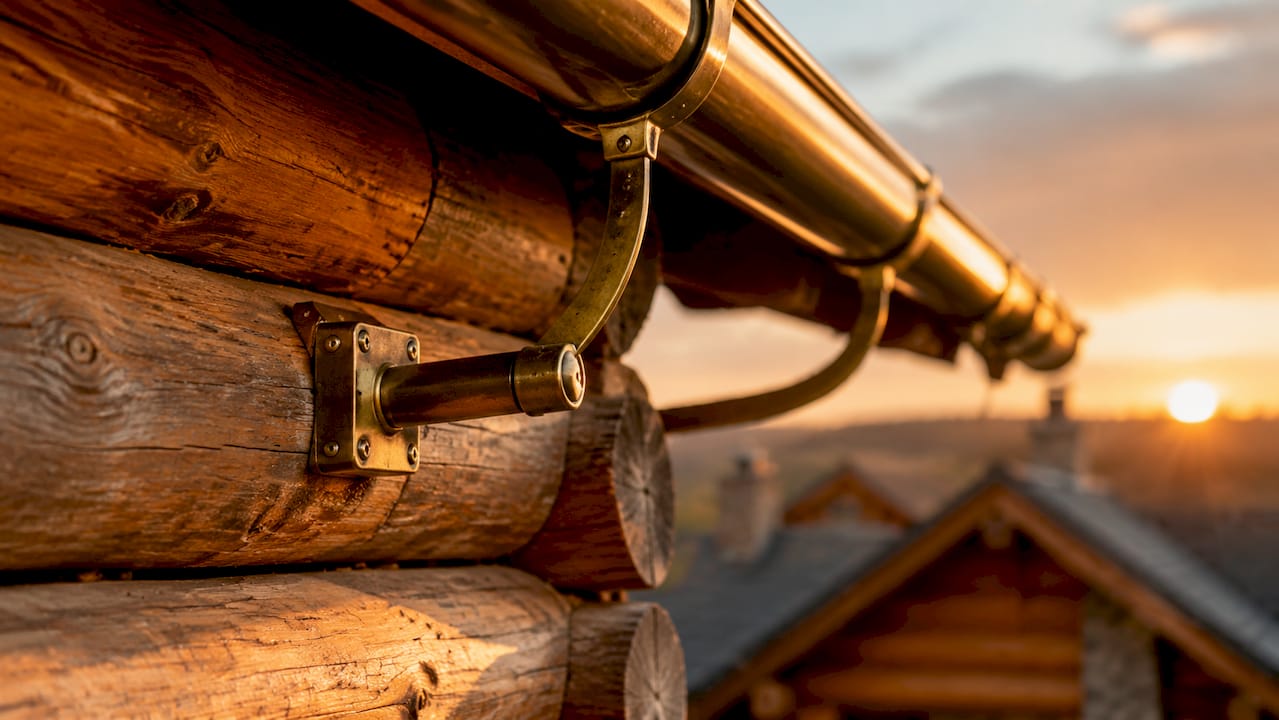
The two methods that solve this problem are strap hangers and standoff brackets.
| Method | How It Works | Key Benefit |
|---|---|---|
| Strap hangers | Wrap around the log rather than penetrating it | No holes in the timber; accommodates movement |
| Standoff brackets | Hold the gutter 3 inches away from the log face | Prevents staining and allows air circulation |
| Fascia-fixed brackets | Screwed directly to the fascia board | Standard method; not recommended for full log walls |
| Roof-frame anchoring | Brackets fixed to the structural roof frame | Stable anchor point unaffected by log shrinkage |
Using strap hangers and standoff brackets keeps gutters roughly 3 inches from the log surface. That gap reduces the risk of staining and means the gutter can flex slightly without pulling the mounting hardware out of the wood.
Fixing gutter brackets to the fascia at log ends risks uneven stress and pull-away because logs shrink at different rates. Anchoring to the roof frame with strap or standoff systems is the recommended approach for any full-log or heavy-timber cabin.
A wide roof overhang helps, but it does not replace gutters. Controlled water pathways are still needed to reduce splash-back and soil erosion even when the overhang throws water well clear of the walls.
Pro Tip: Before fitting any gutter system, check whether your cabin logs have finished settling. New log cabins can shrink considerably in the first year or two. Fitting gutters after the initial settlement period reduces the risk of brackets pulling loose.
Where should downspouts discharge water?
Downspout placement is one of the most overlooked parts of log cabin drainage solutions. Getting the gutter channel right means nothing if the water is dumped straight back against the cabin base.
Downspouts should discharge water at least 6 feet from the cabin foundation to avoid re-wetting the base logs and saturating the soil around the footings. Discharging too close creates pooling, and damp soil wicks moisture back up into the lower log courses.
Practical ways to manage discharge effectively:
- Downspout extensions. Fit a simple plastic or aluminium extension to carry water further from the base. These are inexpensive and easy to fit.
- Splash blocks. Place a concrete or plastic splash block at the discharge point to spread the water and slow its flow, reducing erosion.
- French drains. For cabins on sloping ground or in high-rainfall areas, a French drain carries water away underground and prevents pooling entirely.
- Grading the ground. The soil around the cabin base should slope away from the structure. Even a gentle gradient of a few centimetres over a metre makes a real difference.
Both downspout discharge distance and clogged gutter overflow prevention are equally important. Poor maintenance cancels out the benefit of a well-placed downspout. If the gutter is blocked and overflows next to the cabin, the discharge distance becomes irrelevant.
What does routine gutter maintenance involve?
Gutter maintenance in log cabins is not a once-a-year job. The consequences of neglect are serious enough that a regular schedule is worth building into your cabin care routine.
Follow these steps to keep your system working properly:
- Clean gutters at least four times a year. Seasonal inspection and clearing is the minimum needed to maintain system performance and prevent log decay. Prioritise cleaning before the main rainy season and after autumn leaf fall.
- Check the gutter pitch. Gutter pitch must be about 1/16 inch drop per 10 feet to keep water moving toward the downspout. Sagging sections pool water and cause staining.
- Look for corroded or loose fasteners. Sagging gutters are usually caused by corroded brackets. Replace them before the sag gets worse and the gutter pulls away from the mounting.
- Seal any joints or cracks. Maintenance scheduling should prioritise peak rainy seasons, focusing on gutter cleaning and joint sealing to prevent overflow splash-back and rot.
- Clear pine needles and leaf debris. Cabins surrounded by trees face faster clogging. Pine needles are particularly problematic because they compact into a dense mat that blocks water flow even when the gutter looks clear from below.
Pro Tip: Use a garden hose to flush the gutter from the far end toward the downspout after clearing debris. This confirms the pitch is correct and the downspout is clear before the next heavy rain.
For a full seasonal checklist, the autumn maintenance guide from Logcabinkits covers the key tasks in detail.
How do cold climates affect gutter systems on log cabins?
Cold weather adds a layer of complexity to log cabin drainage solutions that owners in milder parts of the UK may not face, but those in northern or elevated areas certainly will.
In cold climates, gutters form a last line of defence against ice dams and water backup that cause fascia rot and gutter damage. An ice dam forms when heat escaping through the roof melts snow, which then refreezes at the cold eaves. The resulting ice blocks the gutter and forces meltwater back under the roof covering and into the wall.
The main cold-weather risks are:
- Freeze-thaw cycles. Repeated freezing and thawing ruins gutter pitch, causes sagging, and stresses the mounting hardware.
- Ice dam water backup. Blocked gutters allow water to back up under roof tiles or felt, reaching the top log courses and the roof structure.
- Snow load damage. Heavy snow sitting in a gutter adds significant weight. Gutters not designed for this load will sag or pull away from the mounting.
- Fascia rot. Water trapped behind ice dams sits against the fascia board for days or weeks, causing rot that spreads into the roof structure.
Seamless gutters are the best choice for cold-climate cabins. They have fewer joints, which means fewer points where ice can force a gap and water can escape. Keeping the pitch correct is even more critical in winter because any low point becomes a site for ice to accumulate.
![Log cabin with guttering in a woodland setting]
Key takeaways
Guttering protects log cabins by collecting roof runoff, directing it away from the structure, and requiring regular maintenance to stay effective.
| Point | Details |
|---|---|
| Gutters prevent rot | Without gutters, repeated water saturation causes fungal decay and insect damage in lower log courses. |
| Use log-specific mounting | Strap hangers and standoff brackets accommodate log movement and prevent staining or bracket pull-away. |
| Discharge water 6 feet away | Downspouts must carry water at least 6 feet from the foundation to stop soil saturation and moisture wicking. |
| Clean gutters quarterly | Inspect and clear gutters at least four times a year, prioritising the period before heavy rain seasons. |
| Cold climates need extra care | Seamless gutters with correct pitch reduce ice dam risk and freeze-thaw damage in colder regions. |
Why i think most log cabin owners underestimate their gutters
I’ve seen a lot of log cabins where the owner has spent real money on quality timber, a good finish, and a solid foundation, then fitted the cheapest guttering available and never looked at it again. That’s a false economy.
The most common mistake I see is standard fascia-fixed brackets on a full-log wall. The logs move. The brackets don’t. Within a couple of seasons, you get gaps, staining, and in some cases the gutter pulling away entirely. The fix is straightforward, but most people don’t know it’s a problem until the damage is visible.
The second thing I’d flag is discharge distance. People fit the downspout, it empties near the base of the cabin, and they consider the job done. Six feet is the minimum. If your ground slopes toward the cabin, you need an extension or a drain.
Guttering isn’t the most exciting part of owning a log cabin. But getting it right from the start, and keeping it clean, saves you from the kind of repair bills that make you wish you’d paid more attention. A good weatherproofing approach treats guttering as part of the whole system, not an afterthought.
— Martin
Find the right log cabin for your garden

If you’re planning a new cabin and want to get the drainage right from day one, Logcabinkits makes it straightforward. The range of garden log cabins includes designs with generous roof overhangs that work well with standard gutter systems, and the bespoke cabin design service lets you specify exactly what you need. Whether you want a compact garden room or a larger custom build, the team can advise on drainage considerations as part of the build. Free UK delivery is included, and expert support is available throughout the process.
FAQ
What is the main role of guttering in log cabins?
Guttering collects rainwater from the roof and channels it away from the cabin’s wooden structure and foundation. This prevents the repeated moisture exposure that causes rot, insect damage, and structural deterioration in log walls.
Can i use standard gutters on a log cabin?
Standard gutters can be used, but they must be mounted with strap hangers or standoff brackets rather than standard fascia brackets. This accommodates the natural movement of logs as they shrink and expand with changes in humidity.
How often should i clean my log cabin gutters?
Clean and inspect your gutters at least four times a year. Focus particularly on the period before the main rainy season and after autumn leaf fall, when debris build-up is at its highest.
Do i need gutters if my cabin has a wide roof overhang?
Yes. A wide overhang throws water further from the walls, but it does not eliminate splash-back or control where the water lands. A proper gutter system with a correctly placed downspout is still needed to protect the foundation and lower logs.
What causes gutters to sag on a log cabin?
Sagging is most often caused by corroded fasteners or brackets pulling away from the mounting point due to log movement. Check fasteners during each seasonal inspection and replace any that show signs of rust or loosening.
Recommended
- blog the role of log cabin thickness explained | Specialist Garden Cabin Supplier
- blog cabin roof pitch why it matters for your garden log cabin | Specialist Garden Cabin Supplier
- blog roof design in cabins why it matters more than you think | Specialist Garden Cabin Supplier
- blog the purpose of tongue and groove logs explained | Specialist Garden Cabin Supplier